

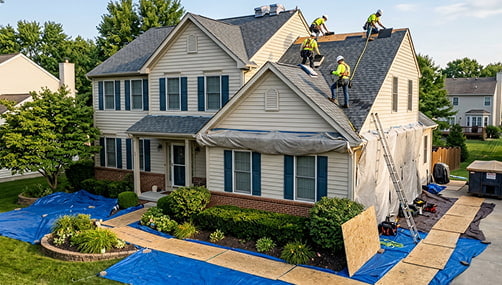
Here is something nobody tells you when you first buy a house in Colorado Springs: your roof has one of the toughest jobs in the country. Hailstorms roll through in spring and summer with almost no warning. UV exposure at altitude chews through shingles faster than it does at sea level. Then winter brings snow loads, ice dams, and freeze-thaw cycles that work their way into every small crack and gap. By the time a roof in this part of Colorado starts showing obvious problems, it has usually been dealing with hidden stress for a while.
So when the time comes to think about a replacement, it helps to go in knowing a few things — about materials, about the insurance process, and about what actually separates a good roofing contractor in Colorado Springs from a bad one.
How Do You Know It’s Time to Replace Rather Than Repair?
This is the question we get most often, and the honest answer is: it depends. Age matters a lot. Most asphalt shingle roofs are designed to last 20 to 30 years under normal conditions, but Colorado’s climate shortens that window. A roof that’s 18 years old and has been through several hail seasons may have less life left than its age suggests.
Beyond age, watch for these:
- Granules collecting in your gutters after rain. Those granules are the UV-protective coating on your shingles — when they go, the asphalt underneath degrades fast.
- Shingles that are curling at the edges or cracking across the surface. This is usually a sign of age combined with thermal movement — the shingles have expanded and contracted one too many times.
- Leaks in multiple spots, or a repaired area that keeps failing. One leak is often patchable. Recurring leaks in different areas usually mean the whole system is breaking down.
- Visible hail hits. If your gutters, window screens, and AC unit all show denting from a recent storm, your shingles took a hit too — even if they look okay from the ground. This is where a professional roof inspection makes a real difference.
Choosing the Right Material for Colorado’s Climate
Not all roofing materials perform the same way under Colorado conditions. Here’s what actually works well here:
Architectural asphalt shingles are still the most common choice, and for most homes they make a lot of sense — cost-effective, available in a wide range of colors and profiles, and relatively straightforward to install well. The key word in Colorado Springs is Class 4 impact-resistant shingles. Class 4 is the highest impact rating available and means the shingle is tested to withstand a 2-inch steel ball drop without cracking. That matters here. Hail that size isn’t rare.
Beyond durability, there’s a financial reason to look at Class 4: many Colorado insurance carriers offer a discount of 20 to 30 percent on your homeowners premium for homes with Class 4 rated roofing. Over time, that can offset a big chunk of the cost difference between standard and impact-resistant shingles. Ask your insurance agent before you finalize your material choice.
Metal roofing has been growing in popularity and it earns the attention. A properly installed metal roof can last 40 to 70 years, handles hail and snow load better than asphalt, and doesn’t lose granules because it doesn’t have any. The upfront cost is higher, but for homeowners planning to stay long-term it’s often the better value.
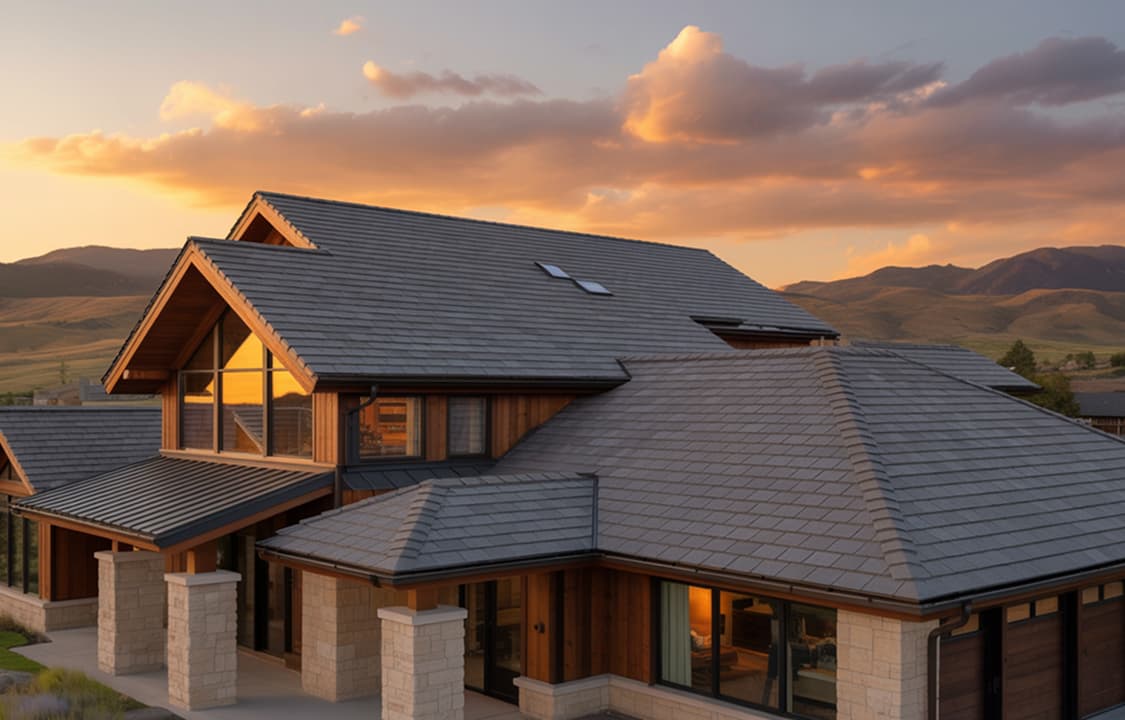
Synthetic and composite shingles sit between asphalt and metal — engineered for impact resistance and designed to look like slate or wood shake. Lighter than natural stone, better rated for impacts than standard asphalt, and increasingly popular in Colorado Springs neighborhoods where aesthetics matter.
One thing worth knowing: Class 4 impact-resistant shingles may qualify your home for a homeowners insurance discount in Colorado. Always confirm with your carrier before you order materials — it’s one of the most overlooked money-savers in a roof replacement.
The Insurance Side of a Roof Replacement
If your roof has hail or wind damage, your homeowners policy may cover the replacement — and in Colorado Springs, this comes up a lot. Here’s how the process actually works:
Before you call your insurance company, call a roofing contractor you trust. Get a professional inspection done first. The inspector will document the damage with photos, measurements, and a written assessment. That gives you independent documentation before the insurance adjuster shows up — and it puts you in a much stronger position during the claims process.
When the adjuster visits, ask your contractor to be there. A good roofing contractor in Colorado Springs knows exactly what insurance adjusters look for, and they can flag damage that might otherwise get overlooked. It’s your right to have representation during that inspection.
You’ll receive two checks if the claim is approved: an Actual Cash Value check upfront (the depreciated value of your old roof minus your deductible), and a Recoverable Depreciation check once the work is complete. Make sure you submit your completion documentation — some homeowners leave money on the table by not following up.
One warning worth repeating: after big hailstorms, out-of-state contractors flood neighborhoods offering fast repairs. Some do fine work. Many don’t, and they won’t be around if problems surface six months later. Always choose a local roofing contractor in Colorado Springs with verifiable reviews, a physical address, and proper Colorado licensing.
What Actually Happens During a Roof Replacement
Most residential roof replacements in Colorado Springs take one to two days. Here’s what that looks like in practice:
The old roofing material comes off first — all the way down to the decking. Any sections of plywood or OSB that are soft, rotted, or water-damaged get replaced before anything new goes on. This step matters more than most homeowners realize. New shingles on bad decking is a problem waiting to happen.
Next comes the underlayment — a protective barrier between the decking and shingles. In Colorado, ice and water shield gets installed along the eaves and in valleys, which is especially important for preventing ice dam damage in winter.
Flashing gets replaced or resealed around chimneys, skylights, and vent pipes. This is often where roofs fail first, so it deserves attention. Then shingles go on from the bottom edge up, ridge caps are installed, and ventilation components are secured.
Before the crew leaves, you get a magnetic nail sweep of the yard and driveway, a full debris cleanup, and a walkthrough with the project manager. A good roofing contractor leaves your property cleaner than they found it — and hands you your warranty documentation before they drive away.
How to Pick the Right Roofing Contractor in Colorado Springs
The roofing industry has a reputation problem, and it’s not entirely undeserved. Here’s what actually matters when you’re choosing someone to work on your home:
They’ve been in Colorado Springs for a while. Longevity means accountability. A company that’s been working in this market for years has real relationships and real reviews — and they’ll be here if something needs to be addressed under warranty.
They’re licensed and insured in Colorado. Ask for proof. Liability coverage and workers comp both matter. If something goes wrong on an uninsured job site, the exposure lands on you.
Their estimates are written and itemized. A verbal quote or a vague one-line number is a red flag. You should be able to see exactly what materials are being used, at what cost, and what the labor covers.
They pick up the phone. This sounds obvious, but poor communication is the most common complaint homeowners have about contractors. If they’re hard to reach before the job starts, they’ll be harder to reach after.
At Golden Bee Roofing, we built the company around the things that used to frustrate us about contractors: unclear estimates, zero communication, and nobody available when something went wrong. If you’re looking at a roof replacement in Colorado Springs, we’ll start with a free inspection and give you a straight answer about what your home actually needs.
Replacing a roof is one of the bigger home investments you’ll make. Get the right information first, understand your options, and work with a roofing contractor in Colorado Springs who’ll be honest with you from the first call to the final walkthrough.

0 Comments